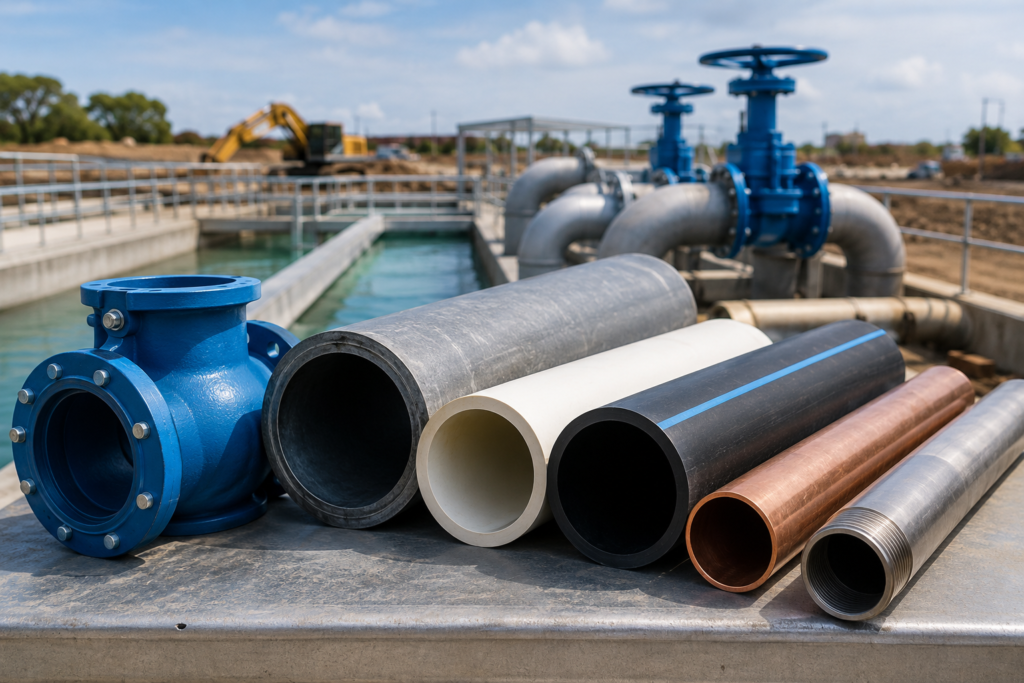
A water infrastructure job can fall apart over something as simple as the wrong pipe material.
You see it during shutdowns all the time. Pipework starts leaking during pressure testing. Stainless welds show signs of contamination six months after commissioning. Buried lines corrode earlier than expected because the coating system was wrong for the environment. Then the client is paying for excavators, shutdown crews, rewelding, retesting, and another round of commissioning.
That is why piping materials for water infrastructure need proper thought before fabrication even starts. Material choice affects lifespan, maintenance costs, shutdown risk, installation time, and long term reliability.
For project managers and water infrastructure contractors, the goal is simple. Install it once. Pass testing. Keep it running for years without headaches.
Why Piping Materials for Water Infrastructure Matter
Water and wastewater systems work in rough environments.
Some pipework sits underground for decades. Some operates around chlorine, sulphur compounds, or chemical dosing systems every day. Pump stations deal with vibration and pressure cycling constantly. Treatment plants run in wet conditions where corrosion never really stops.
The wrong material might survive commissioning. It usually does not survive years of pressure, vibration, moisture, and chemical exposure.
A lot of failures do not happen immediately either. They creep in slowly.
A welded support starts rusting where the coating was damaged during installation. A stainless line develops contamination around poorly cleaned welds. A badly selected gasket material breaks down under chemical exposure and starts leaking during operation.
Then the shutdown crews get called back.
That becomes expensive very quickly, especially on live infrastructure sites where access windows are tight and multiple contractors are working around each other.
If you are planning upgrades or shutdown works, QSW’s guide to mechanical installation services for water authorities explains more about reducing risk during live infrastructure projects.
Mild Steel Pipework Still Has Its Place
Mild steel gets used heavily across pump stations, treatment plants, manifolds, and mechanical systems because it is strong and cost effective.
For larger fabricated systems, it still makes sense in a lot of situations.
You will see mild steel used for:
Large diameter manifolds
Pump station pipework
Mechanical plant systems
Pipe supports and fabricated brackets
Stormwater infrastructure
Above ground process lines
The problem is corrosion.
If coating systems are damaged during transport or installation, rust usually starts around welds, supports, and flange connections first. Once moisture gets in, the deterioration spreads quickly.
A lot of long term issues come back to fabrication quality as well. Poor weld prep, rushed fit up, or pipework pulled into alignment onsite creates stress in the system before it is even commissioned.
Then the pumps start cycling.
That is when cracks, vibration problems, and leaking flanges start appearing.
For more detail on fabrication methods and material selection, read QSW’s article on piping fabrication for water infrastructure.
Stainless Steel Works Well in Harsh Environments
Stainless steel costs more upfront, but it handles harsh operating conditions far better than mild steel in many water applications.
That is why you see it regularly used in:
Chemical dosing systems
Potable water infrastructure
Wastewater treatment plants
Coastal infrastructure
High moisture environments
316 stainless is common because it deals with corrosion far better than lower grades, especially around aggressive wastewater environments or salt exposure near the coast.
But stainless only performs properly if it is fabricated properly.
Contaminated welds, poor heat control, or dirty prep work can still cause failures later. Good stainless welding comes down to clean material, controlled heat input, correct filler wire, and welders who know what they are doing.
You can usually spot poor stainless work early. Heat tint left untreated around welds. Contamination marks. Rough internal finishes where bacteria or product build up starts collecting.
That is the sort of stuff clients remember after handover.
QSW’s guide to welding standards for water infrastructure covers the quality requirements that help avoid these issues.
HDPE Pipework Has Different Challenges
HDPE has become common across buried water and wastewater infrastructure because it does not corrode and handles ground movement well.
It is lightweight, flexible, and useful across long pipeline runs.
You will often see HDPE used for:
Rising mains
Water transfer lines
Stormwater systems
Rural infrastructure
Buried wastewater pipelines
Most HDPE failures are not caused by the material itself. They come from poor fusion welding.
If joints are rushed, contaminated, or slightly out of alignment, the problem normally shows up during pressure testing. Sometimes later once the system has been operating under load for a while.
That is why experienced crews take their time with fusion prep, alignment, heating temperatures, and cooling times.
There are no shortcuts with HDPE. A bad joint still fails no matter how good the pipe itself is.
If you want to understand how these systems are installed onsite, QSW also explains the process in this step by step guide to pipe installation in water systems.
Ductile Iron Is Still Common Across Civil Infrastructure
Ductile iron remains popular because it is durable and handles high pressure environments well.
A lot of councils and water infrastructure companies still specify ductile iron for buried water mains and civil infrastructure upgrades because the material has a long track record in the field.
It is a tough pipe. But it is also heavy.
That affects lifting requirements, crane access, excavation planning, and installation time onsite. Poor handling during unloading or installation can damage linings and protective coatings before the line is even operational.
That becomes a problem years later when corrosion starts developing underground.
The Water Services Association of Australia also provides industry guidance around water infrastructure standards and asset management through WSAA.
The Environment Usually Decides the Material
Material selection is rarely just about budget.
A stainless line inside a coastal wastewater facility faces completely different conditions to a buried stormwater line in regional Victoria.
A pump station manifold operating under constant vibration needs different support and fabrication detail compared to a gravity fed water line.
Then you add chemical exposure into the mix.
Chlorine systems, acidic wastewater, trade waste, and treatment chemicals all affect how different materials perform over time.
Experienced water infrastructure contractors normally review things like:
Operating pressure
Chemical exposure
Temperature changes
Ground conditions
Maintenance access
Expected service life
Shutdown constraints
Future upgrade requirements
The projects that run smoothly are usually the ones where these conversations happen early, before fabrication starts and before materials are ordered.
QSW’s article on how mechanical installation supports water treatment plants explains how these decisions affect long term plant performance.
Fabrication Quality Matters Just As Much As Material Choice
Good piping materials for water infrastructure still fail if fabrication quality is poor.
A pipe spool might look fine sitting in the workshop. Then it arrives onsite and everything is fighting alignment by 10 millimetres. Crews start pulling pipework into place with chain blocks just to make connections fit.
That stress stays in the system.
Once pumps start operating and pressure cycles begin, the weak points start showing themselves.
You see it during commissioning. Leaking flanges. Vibration through supports. Weld repairs holding up hydrostatic testing while everyone onsite waits around.
A pump station shutdown might only get a 48 hour isolation window. If fabricated spools are wrong, the entire commissioning sequence gets delayed. Electricians, operators, civil crews, and commissioning teams all get pushed back because pipework does not fit properly.
That is why fabrication and installation need to work together from the start.
At QSW, fabrication is planned around actual site conditions, not just workshop drawings. Pipe spools, supports, access systems, and mechanical components are built with installation access, lifting requirements, and commissioning in mind before they ever leave the workshop.
That cuts down site modifications, reduces rework, and keeps shutdown work moving.
You can also see how this works in practice in QSW’s mechanical installation and pipe fabrication case study.
What Good Water Infrastructure Contractors Pay Attention To
Anyone can install what is shown on a drawing. The better contractors pick the problems before the system goes live.
That usually comes down to experience.
Good crews think about:
Access for maintenance teams later
Valve positioning
Pipe support spacing
Expansion movement
Drainage points
Isolation access
Weld sequencing
Testing requirements
Commissioning practicalities
The difference shows up at the end of the project.
Pressure testing goes smoother. Fewer weld repairs are needed. Pumps run cleaner with less vibration. Operators are not calling crews back six weeks later because something started leaking after startup.
That is what clients actually care about.
For more insight into pump station work, QSW also covers what pump stations are and why they matter for water authorities.
Choosing the Right Team for Water Infrastructure Pipework
Water infrastructure projects move fast once shutdowns begin. There is no time for fabrication mistakes, poor weld quality, or pipework that does not fit.
You need teams that understand live infrastructure environments and know how to deliver reliable mechanical installation under pressure.
QSW provides fabrication, welding, piping installation, shutdown support, and mechanical services for water treatment plants, wastewater infrastructure, pump stations, and industrial facilities across Victoria. If you need experienced support with piping materials for water infrastructure projects, contact QSW to discuss your next project.