Water infrastructure mechanical installation is hard work to get right. You are dealing with pressure, live systems, and tight shutdown windows. If a weld fails, it does not stay a small problem. It turns into leaks, rework, and delays that cost real money.
You see it all the time on site. A section fails pressure testing. The crew cuts it out, rewelds it, and tests again. Hours gone. Sometimes a full day. That is why welding standards matter. They stop those problems before they start.
Why Welding Standards Matter on Water Projects
Think about a live pump station upgrade. You might get a 48 hour shutdown window. Everything has to be installed, tested, and back online before that window closes.
If a weld fails at the end, you are in trouble. You are not just fixing a weld. You are holding up commissioning, pushing other trades back, and answering calls from the client.
For any water infrastructure contractor in Victoria, that risk is front of mind. Standards are there to remove that risk. They set the rules so every weld is done the same way, every time. If you want a broader breakdown of how these projects run, this guide on mechanical installation services for water authorities gives a solid overview.
The Standards That Govern the Work
Most water infrastructure companies in Australia work to a few key standards.
AS 1554 covers structural steel welding. AS 4041 deals with pressure piping. On top of that, water authorities often add their own project specs. These can be strict, especially on stainless and pressure systems.
These standards define everything. Joint prep. Welding methods. Heat control. Inspection. What passes and what fails.
They are not there to slow the job down. They are there so you do not have to fix the same problem twice.
Standards set the rules. Quality assurance is how those rules get followed on site.
What Quality Assurance Looks Like in Practice
Quality assurance starts before anyone strikes an arc.
The first step is welding procedures. These are written, tested, and approved. They match the material and the job. Stainless pipework is handled differently to mild steel. Pressure piping has tighter controls again.
Next is the welders. Every welder needs to be qualified for the procedure they are using. That is recorded and tracked. No guessing.
Then comes fabrication. This is where a lot of jobs are won or lost. If pipe spools are built properly in the workshop, installation runs smoother. Fit up is clean. Dimensions are right. Less time wasted on site. You can see how this ties into real-world outcomes in this case study on mechanical installation and pipe fabrication.
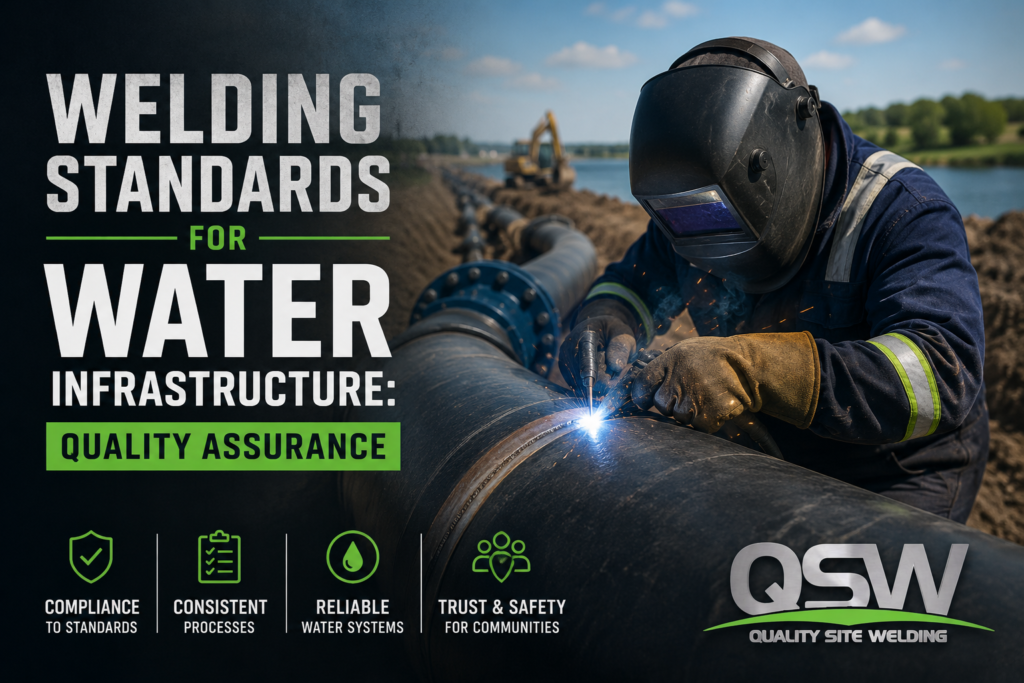
On site, inspection takes over. Visual checks happen first. Then testing where required. Dye penetrant for surface defects. Radiographic testing for critical welds. For more on inspection standards, refer to the official guidance from Standards Australia.
Finally, pressure testing. If everything has been done properly up to this point, this stage is straightforward. If not, this is where the problems show up.
The Link Between Fabrication and Installation
Fabrication and installation are tied together. You cannot separate them.
A well built spool drops into place. Bolt holes line up. Weld prep is clean. The crew installs it and moves on.
Now picture the opposite. A flange is out by a few millimetres. Pipe length is off. Suddenly the crew is cutting and modifying on site just to make it fit.
That adds new welds. More time. More risk.
We have seen jobs where a single misaligned spool added six hours on site. Multiply that across a project and you lose days. If you want to understand the fabrication side in more detail, this article on piping fabrication for water infrastructure breaks it down well.
That is why workshop quality matters just as much as site work.
Real World Impact on Projects
Take a treatment plant upgrade. You have a shutdown booked. Crews are lined up. Equipment is hired.
If the welding and installation are right, the system is installed, tested, and handed back on time.
If not, delays stack up quickly. A failed weld can push you past the shutdown window. That means extra labour, extended hire costs, and pressure from the client.
In some cases, it also affects operations. Water systems do not have much room for downtime. This becomes even more obvious when working on pump stations and water infrastructure where uptime is critical.
This is where proper water infrastructure mechanical installation makes the difference. It protects the schedule as much as the asset itself.
Choosing the Right Contractor
Not every contractor works the same way.
Some will tick the boxes. Others build their whole process around doing it properly from start to finish.
When you are reviewing water infrastructure companies, ask direct questions. Do they have documented welding procedures. Are their welders qualified. How do they handle inspection and testing.
If they cannot show you that clearly, it is a risk.
A contractor who handles fabrication and installation together will give you better results. Less rework. Fewer delays. A smoother handover. You can also review past outcomes through their completed projects to see how they perform in real conditions.
Getting It Right the First Time
Good welding does not happen by accident. It is planned, checked, and signed off the whole way through.
In water infrastructure mechanical installation, that approach saves time and money. You avoid rework. You avoid blown shutdown windows. You hand over a system that runs the way it should.
If you are planning a project and want it done the first time properly, work with a team that understands the full process from workshop to site. Quality Site Welding handles pipework fabrication, welding, and mechanical installation across Victoria. If you need a contractor who can deliver compliant work without the usual headaches, get in touch via the contact page, and we will talk through your project.