
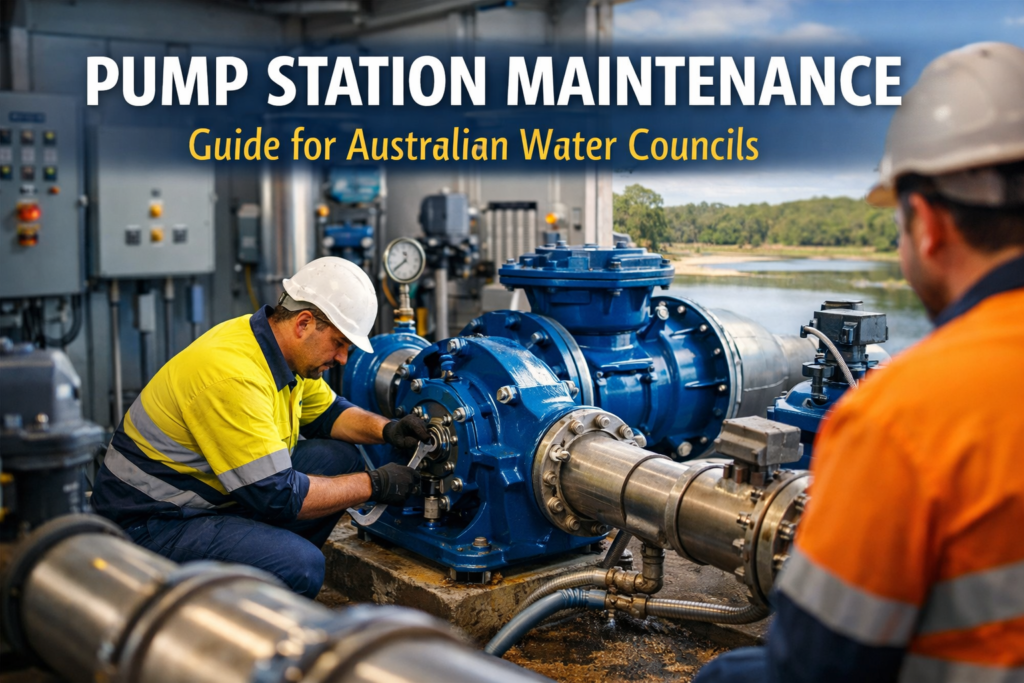
Pump station maintenance plays a critical role in keeping Australia’s water and wastewater networks operating safely and reliably. When pump stations perform as intended, communities experience uninterrupted services and environmental risks are controlled. When maintenance is neglected or poorly executed, failures can result in service outages, regulatory issues and costly emergency repairs.
For Australian water councils and authorities, pump station maintenance is not a reactive task. It is a core part of asset management that directly affects public health, environmental compliance and long-term infrastructure performance. Understanding what effective pump station maintenance involves and how mechanical systems behave over time is essential for protecting these assets.
Why Pump Station Maintenance Is Critical for Councils
Pump stations operate continuously in harsh conditions. They handle fluctuating flows, corrosive wastewater, abrasive solids and frequent start-stop cycles. Even well-designed pump stations will deteriorate without structured and informed maintenance.
Most pump station failures are not sudden events. They develop gradually through misalignment, vibration, corrosion or wear that goes undetected. When issues are identified early through proper maintenance inspections, they can usually be corrected before they escalate into major failures.
Effective pump station maintenance reduces the risk of emergency shutdowns, improves operational reliability and extends the working life of mechanical assets. For councils managing multiple pump stations across large regions, this reliability is essential for cost control and service continuity.
What Effective Pump Station Maintenance Involves
Pump station maintenance must address the entire mechanical system rather than focusing only on the pump itself. Pipework, valves, fittings, supports and structural interfaces all influence long-term performance.
Mechanical pipework within pump stations must remain correctly aligned and adequately supported. Over time, settlement, vibration and thermal movement can place stress on flanges, welds and supports. If these issues are not addressed, leaks and joint failures become increasingly likely.
Valves and isolation equipment also require regular inspection and testing. Valves that do not fully open or seal correctly compromise safety during shutdowns and increase operational risk during maintenance works.
Pump condition monitoring is another critical element. Wear on bearings and seals, cavitation damage and performance inefficiencies often indicate underlying mechanical or installation issues rather than pump defects alone.
Planned Maintenance Versus Reactive Repairs
Councils often face competing priorities that push maintenance toward a reactive approach. While emergency repairs are sometimes unavoidable, they are rarely cost-effective.
Planned pump station maintenance allows inspections, repairs and component replacements to be scheduled during controlled shutdown windows. This reduces disruption to services and improves safety outcomes for maintenance crews.
Reactive repairs usually involve urgent mobilisation, higher labour costs and limited scope for proper rectification. They also increase risk, particularly when work is carried out under time pressure in confined or hazardous environments.
Councils that prioritise planned maintenance consistently achieve better reliability and lower whole-of-life asset costs.
The Importance of Mechanical Installation Quality
Many maintenance problems originate from installation quality rather than operational misuse. Poor pipe alignment, inadequate supports, rushed welding or incorrect material selection can significantly shorten asset life.
Mechanical installation quality directly affects vibration levels, load distribution and long-term system stability. Even small installation errors can lead to recurring maintenance issues that are difficult to resolve without corrective work.
This is why water authorities increasingly engage contractors with strong mechanical installation backgrounds when undertaking pump station maintenance or upgrades. Contractors experienced in fabrication, welding and on-site installation are better equipped to identify root causes rather than treating surface-level symptoms.
Councils planning pump station works often benefit from working with contractors that deliver both installation and mechanical services across water infrastructure environments.
Common Pump Station Maintenance Challenges
Pump stations are frequently located in confined or difficult-access environments. Maintenance activities must comply with strict safety requirements, including confined space entry, isolation procedures and lifting controls.
Corrosion is a persistent challenge, particularly in wastewater applications. Material selection, coatings and protective systems must be appropriate for the operating environment to avoid premature failure.
Vibration and fatigue damage can develop slowly and remain unnoticed until failure occurs. Regular inspection of pipe supports, brackets and welded connections is essential for early detection.
Coordination between mechanical and electrical systems is also critical. Maintenance activities must align with control systems and commissioning requirements to avoid operational conflicts.
When to Engage Specialist Mechanical Contractors
Not all pump station maintenance requires external contractors, but complex mechanical issues should be handled by specialists with water sector experience.
Engaging mechanical contractors early allows maintenance works to be planned properly rather than carried out under emergency conditions. Contractors familiar with water authorities understand compliance requirements, documentation standards and site protocols.
For councils managing multiple pump stations, partnering with a contractor that offers fabrication and on-site mechanical installation can streamline maintenance programs and reduce long-term risk.
Regulatory and Compliance Considerations
Australian water councils operate under strict regulatory frameworks. Pump station maintenance must align with safety standards, environmental obligations and asset management plans.
Documentation such as inspection reports, maintenance records and updated as-built information is essential for compliance and future planning. Mechanical contractors should support these requirements through structured QA processes and traceable documentation.
National guidance on water infrastructure and asset management can be referenced through Australian Government water resources information.
Building Long-Term Pump Station Maintenance Strategies
Pump station maintenance should be viewed as an ongoing strategy rather than a one-off activity. Asset age, operating conditions and network demands all influence maintenance requirements over time.
Councils that invest in proactive maintenance, quality mechanical installation and experienced contractors consistently achieve stronger reliability outcomes. Maintenance strategies should be reviewed regularly and refined based on asset performance data and operational feedback.
Frequently Asked Questions
How often should pump station maintenance be carried out?
Maintenance frequency depends on asset criticality, age and operating conditions. High-risk pump stations typically require more frequent mechanical inspections.
What does pump station maintenance include?
Maintenance includes inspection of pumps, pipework, valves, supports, welds, vibration levels and overall mechanical condition.
What causes most pump station failures?
Most failures result from poor installation, lack of maintenance, corrosion, vibration damage or misaligned mechanical systems.
Is pump station maintenance different for wastewater applications?
Yes. Wastewater pump stations face additional challenges such as corrosive gases, abrasive solids and stricter safety requirements.
Can pump station maintenance be completed without shutdowns?
Some inspections can be performed during operation, but most mechanical works require planned shutdowns for safety and quality control.
Why is pipe alignment important in pump stations?
Misaligned pipework places stress on pumps and joints, increasing the risk of leaks and premature mechanical failure.
Should councils use the same contractor for installation and maintenance?
Using contractors with both installation and maintenance experience improves accountability and long-term asset performance.
How does vibration affect pump station reliability?
Excessive vibration accelerates wear on pumps, bearings, welds and supports, increasing failure risk.
Does proactive maintenance reduce emergency repairs?
Yes. Early identification and correction of issues significantly reduces unplanned failures and emergency call-outs.
Work With an Experienced Mechanical Contractor
If your council is planning pump station maintenance, upgrades or mechanical inspections, engaging a contractor with water infrastructure experience reduces risk and improves long-term outcomes.
Quality Site Welding supports water authorities across Victoria with mechanical installation, pipework, fabrication and pump station works designed for reliability and compliance.